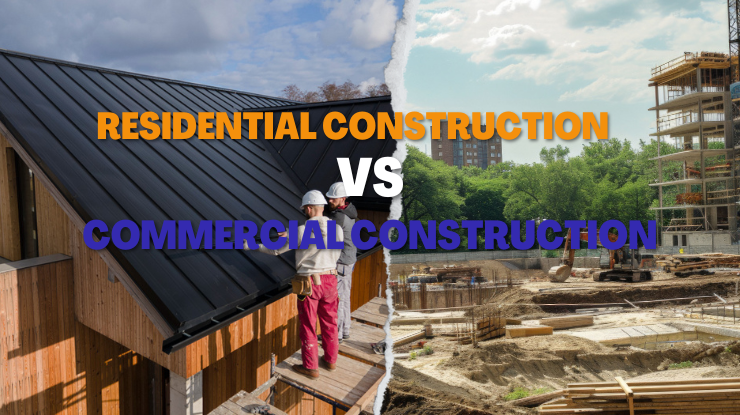
What’s the real difference between commercial and residential construction in Los Angeles, and why does it matter more here than anywhere else?
In a city defined by high-rise corporate hubs in Century City and bespoke hillside estates in Beverly Hills, understanding the difference between commercial and residential construction in Los Angeles is critical for homeowners, developers, and investors alike.
The challenges of zoning, design intent, permitting requirements, and construction materials vary significantly across sectors.
For example, Downtown LA’s tenant improvement (TI) projects follow a different regulatory path than a luxury custom home in the Hollywood Hills. Local agencies like the Los Angeles Department of Building and Safety (LADBS) enforce distinct codes—the California Residential Code (CRC) for homes and the California Building Code (CBC) for commercial structures.
These legal and design frameworks shape everything from your project timeline to the professionals you’ll need on your team.
At LuxDevLA, we specialize in guiding clients through both landscapes – whether hiring a residential contractor in LA to build an ADU or selecting a commercial construction company in Los Angeles for a multi-use development.
This guide will clarify how each sector operates, what differentiates them, and how to make confident, informed decisions.
What are the Key Differences Between Commercial and Residential Construction? – A Quick Comparison Table
To help you get a quick handle on what sets these two types of construction apart in Los Angeles, here’s a side-by-side breakdown of the most important distinctions. From client intent to compliance challenges, this table captures the core contrasts.
| Feature | Residential Construction | Commercial Construction |
|---|---|---|
| Primary Goal | Comfort, aesthetics, and personal use | Functionality, ROI, branding, and public access |
| Typical Client | Homeowners, families | Developers, business owners, corporations |
| LA Building Codes | California Residential Code (CRC), local zoning | California Building Code (CBC), ADA, Fire, Health Dept. |
| Funding | Mortgages, personal savings | Business loans, investor capital |
| Materials | Wood framing, luxury interiors | Steel, concrete, and commercial-grade finishes |
| Project Timeline | Generally shorter, more flexible | Longer duration, tied to fixed operational deadlines |
| Specialists Involved | Architect, interior designer | Architect, MEP engineers, and project managers |
This overview is just the beginning. To fully understand how each sector operates and what that means for your project, we need to explore their characteristics in more depth.
What Defines Residential Construction in Los Angeles?
While the quick table gave us a high-level snapshot, let’s now zoom in on residential projects, especially as they relate to the unique zoning, design preferences, and regulatory environment of Los Angeles.
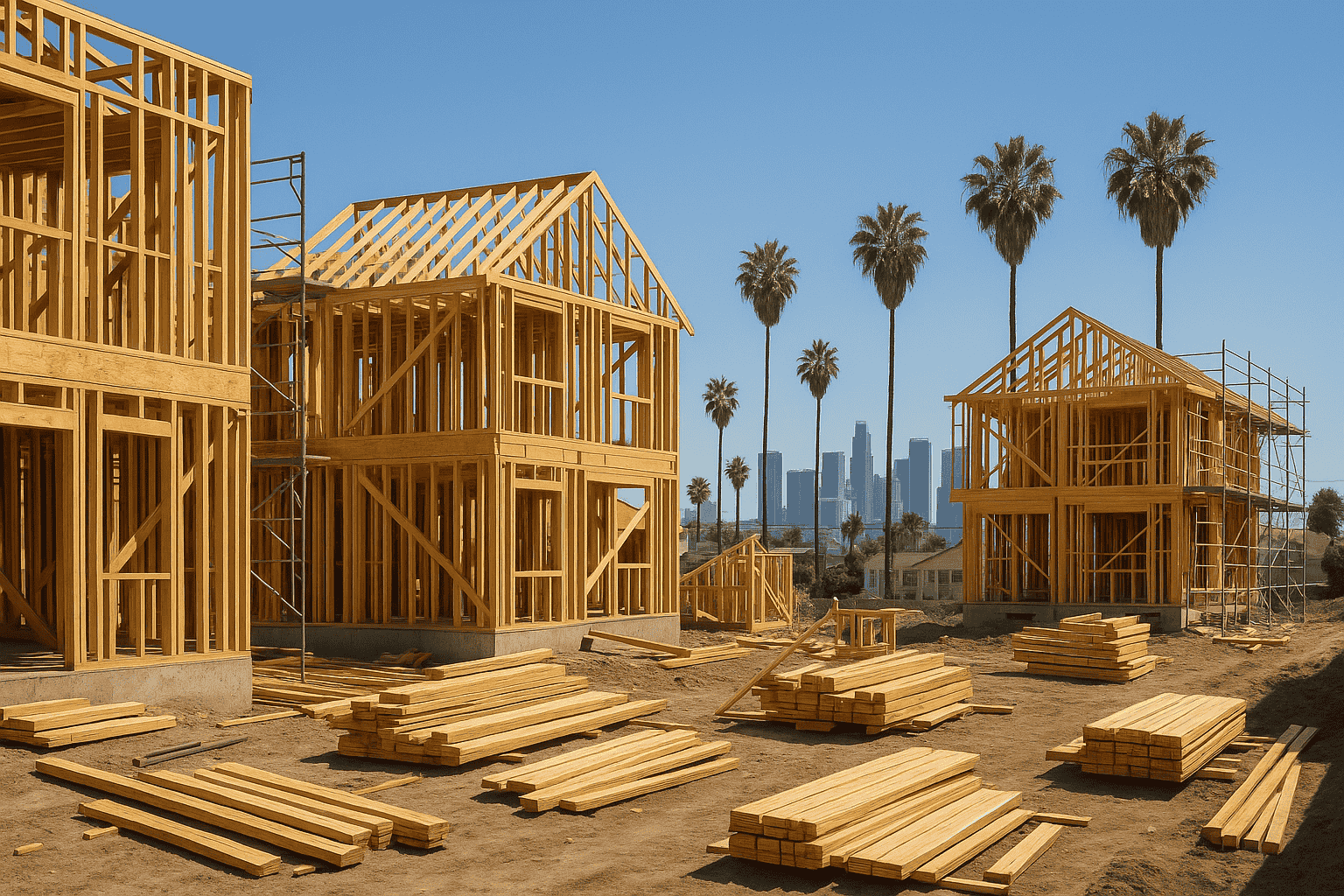
Residential construction in Los Angeles encompasses everything from custom single-family homes in Studio City to luxury estates in Bel‑Air and stylish Accessory Dwelling Units (ADUs) often seen behind historic bungalows in Echo Park.
These builds are deeply personal, designed to reflect your lifestyle, taste, and long-term vision.
As a luxury construction group, LuxDevLA brings that vision to life through full-service execution, managing everything from early-stage planning and architectural collaboration to material sourcing and on-site construction management.
What Building Codes and Permits Affect Residential Projects in Los Angeles?
Residential projects fall under the California Residential Code (CRC), but in Los Angeles, additional layers like LADBS permit requirements, Title 24 energy codes, and neighborhood‑specific zoning (R‑1, R‑2, hillside overlays) are in play. Equally important are HOA approvals and historic district guidelines.
That’s why hiring a local residential construction company like LuxDev in LA, who knows LADBS inside and out, can mean the difference between a smooth permit process and costly delays.
What Materials and Design Elements Are Common in LA Residential Construction?
From traditional wood framing and open‑plan layouts to upscale finishes—imported stone, designer cabinetry, and custom millwork—material choices set the tone. Neighborhood character, whether in Brentwood or Venice, often informs design direction.
Our field crews and vendors are handpicked to deliver exceptional craftsmanship suited to both aesthetic goals and LA’s structural demands.
With a deep understanding of residential builds in L.A., it’s natural to ask: What sets commercial construction in Los Angeles apart?
In the next section, we’ll explore how business-focused projects prioritize functionality, scalability, and regulatory compliance.
What Are the Key Features of Commercial Construction in Los Angeles?
Commercial construction in LA operates under a different set of expectations, where timelines are tighter, regulations are stricter, and outcomes are tied to business function, branding, and code compliance.
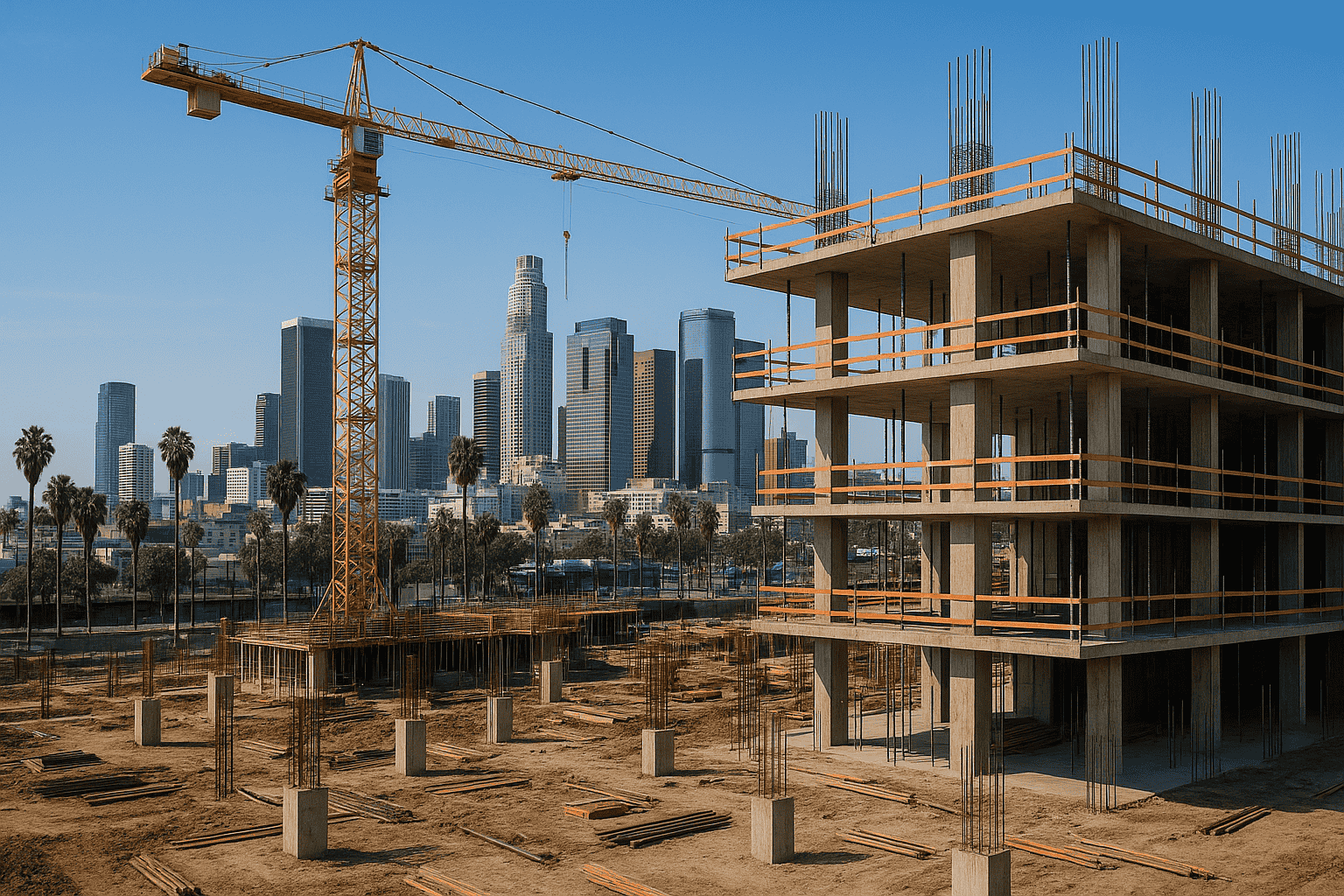
What Types of Projects Are Considered Commercial Construction in LA?
In Los Angeles, commercial construction ranges from retail stores and restaurants to tenant improvement (TI) build-outs, office spaces, and mixed-use developments. These are public-facing projects where layout efficiency, brand experience, and code compliance drive design decisions.
At LuxDevLA, we serve as the construction partner of choice for businesses and developers who need expert guidance in navigating LA’s commercial building environment, from high-traffic retail corridors to creative office conversions.
How Does Commercial Construction Comply With LA Codes and Standards?
Commercial sites in Los Angeles are governed by the California Building Code (CBC) and numerous overlay regulations, including:
- ADA accessibility
- Fire safety systems
- Health department compliance for food establishments
- MEP integration (Mechanical, Electrical, Plumbing)
- Noise, ventilation, and egress standards
LuxDevLA’s commercial division is well-versed in LADBS permit sequencing and the technical reviews required by these agencies. We ensure every build moves smoothly through plan check, inspection, and sign-off.
What Materials and Structural Systems Are Used in Commercial Projects?
Unlike residential builds, commercial spaces rely on reinforced concrete, steel framing, and commercial-grade glazing and flooring. These materials are designed for durability, occupancy, and performance—whether in a medical office, a multi-tenant retail strip, or a branded hospitality venue.
We collaborate with developers and architects to choose materials that satisfy function, aesthetics, and long-term asset value.
Now that we’ve explored both residential and commercial domains, how do these sectors compare side by side, and what should you expect when managing a construction project in either space?
How Do Residential and Commercial Construction Differ in Los Angeles?
The difference between commercial and residential construction in Los Angeles lies in purpose, building codes, and project complexity.
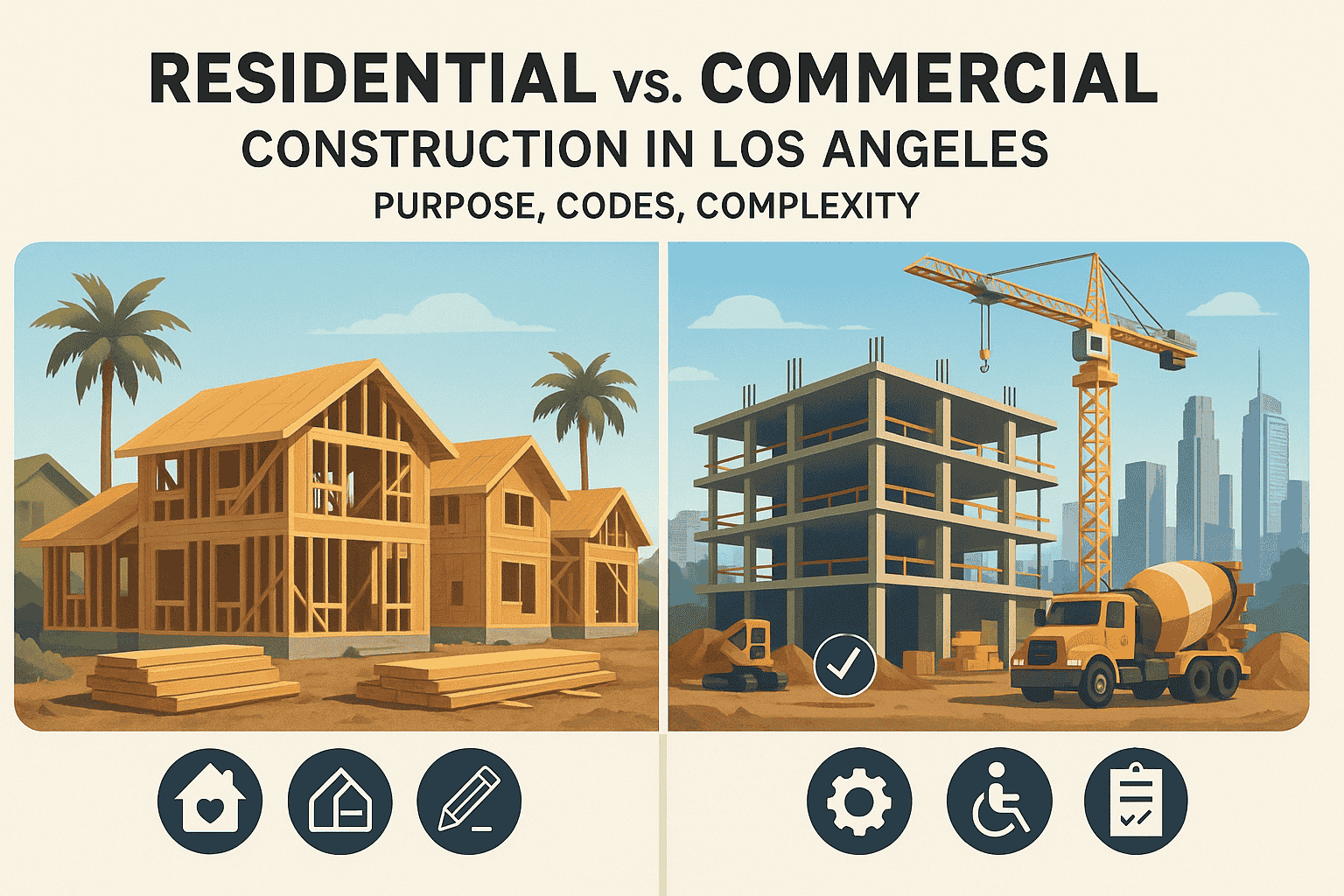
Residential builds focus on comfort, personal design, and living needs, while commercial construction centers on functionality, ADA compliance, and business operations. Each is governed by different codes and approval processes.
Let’s understand this in detail:
In residential construction, the goal is to create livable, customized spaces like a hillside ADU or a modern family home in West LA, guided by personal style and CRC compliance. Commercial construction, on the other hand, must account for public access, regulatory approvals, and system-heavy requirements like HVAC zoning, MEP integration, and ADA mandates.
For example, a home remodel in Los Feliz. It might involve creative design tweaks and Title 24 compliance. Compare that to a tenant improvement project for a retail space in DTLA, where ADA ramps, fire suppression systems, and structural reinforcements are non-negotiable.
Now that we’ve outlined the fundamental differences, let’s shift our focus to what makes Los Angeles a uniquely challenging place to build, whether you’re developing a home, a storefront, or a high-rise.
What Unique Challenges Affect Construction Projects in Los Angeles?
Construction in Los Angeles is more complex due to strict zoning laws, multi-layered permit approvals, neighborhood regulations, and dense urban logistics.
Every project must navigate building codes, local review boards, and site-specific constraints.
Why Is Zoning So Complicated in Los Angeles?
Los Angeles applies dozens of unique zoning overlays across neighborhoods—R1, R2, C zones and beyond, each with its own height, setback, or density restrictions. In areas like Silver Lake or Beverly Hills, design review boards enforce neighborhood conformity, while hillside zones have slope-related build limits.
To prevent missteps, LuxDevLA’s works with planning commissions and community stakeholders to address requirements early and reduce friction later.
How Does Permitting Differ Between Neighborhoods?
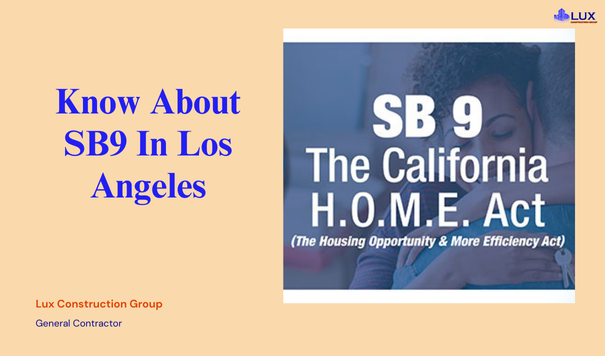
Permits in LA are rarely one-size-fits-all. Hillside homes may require soil reports and grading approvals, while ADUs must comply with SB9 provisions and parking guidelines. Projects near fire zones or historical districts face their own additional permit layers and inspections.
Only 1,325 new-home permits were issued in Q1 2025, compared to 3,067 in Q1 2024, highlighting a dramatic slowdown in housing development across the city (Source)
What About Logistics and Jobsite Constraints?
Narrow driveways, minimal staging areas, and school proximity all influence how construction operates in LA. Deliveries may need timed scheduling. In commercial zones, crews often work under noise ordinance windows and traffic mitigation plans.
Whether we’re building into a hillside lot or managing a downtown tenant improvement, LuxDevLA’s team ensures your build stays compliant, efficient, and neighbor-friendly.
These challenges highlight why you need more than just a licensed builder, you need a strategic partner with deep local knowledge.
In the next section, we’ll explain why contractor selection is one of the most critical decisions you’ll make in any Los Angeles construction project.
Why Does Your Choice of Contractor Matter More in Los Angeles?
In Los Angeles, the right contractor doesn’t just build, they guide, navigate, and protect your investment through every regulatory and logistical challenge.
What Makes LA a Tough Market for Construction?
With overlapping zoning codes, LADBS scrutiny, and high-density building conditions, LA is among the most complex markets for construction execution. Projects are often delayed not because of poor workmanship—but because of mismanaged permits, design misalignment, or failed inspections.
That’s why choosing a contractor here is less about price—and more about proven process.
How Should You Evaluate a Construction Company in Los Angeles?
When reviewing construction firms in LA, look for these action-based signals:
- Built in Your ZIP Code: Ask for neighborhood-specific project examples—not just portfolios.
- Knows the Process, Not Just the Code: Do they proactively handle revisions, plan checks, and community board feedback?
- Hybrid Capability: Can they deliver both luxury-grade detailing and commercial‑level compliance?
- Transparent Communication: Are they upfront about timelines, LADBS delays, and approval bottlenecks?
How LuxDevLA Rises Above the Noise
As a construction group, LuxDevLA doesn’t outsource critical execution—we manage everything in-house, from preconstruction strategy to final walk-through. Whether you’re building an architectural home or a tenant-ready retail space, our role goes beyond construction—we serve as your city-savvy, schedule-committed execution partner.
LuxDevLA: Your Partner for Construction Projects in Los Angeles
LuxDevLA is a full-service construction group specializing in both commercial and residential construction in Los Angeles—with deep expertise in zoning, permitting, and execution.
What Makes LuxDevLA Different?
Unlike niche contractors or design-only firms, LuxDevLA portfolio includes:
- Custom residential builds in Beverly Hills, Pacific Palisades, and Hancock Park
- Commercial tenant improvements across DTLA and West LA
- Mixed-use developments that require both residential finesse and commercial compliance
We combine luxury-level finishes with process-driven project management to execute on time and within budget—even in LA’s most demanding environments.
From Blueprint to Final Walkthrough
Every LuxDevLA project includes:
- Early-stage code compliance analysis
- Design coordination and constructability review
- Permit tracking and LADBS submission
- Jobsite management and client walkthroughs
Our clients trust us to deliver not just quality structures—but total peace of mind.
The Bottom Line
Whether you’re building your dream home or scaling a commercial venture, understanding the difference between commercial and residential construction in Los Angeles is only the first step.
Choosing LuxDevLA as your construction partner means you’re choosing experience, precision, and relentless commitment—across any project type.
Thinking about Commercial & Residential Construction
Let’s talk.
Contact LuxDevLA today to schedule your consultation and bring your residential or commercial vision to life—on time, on budget, and in full compliance with the city of Los Angeles.